AirAsia
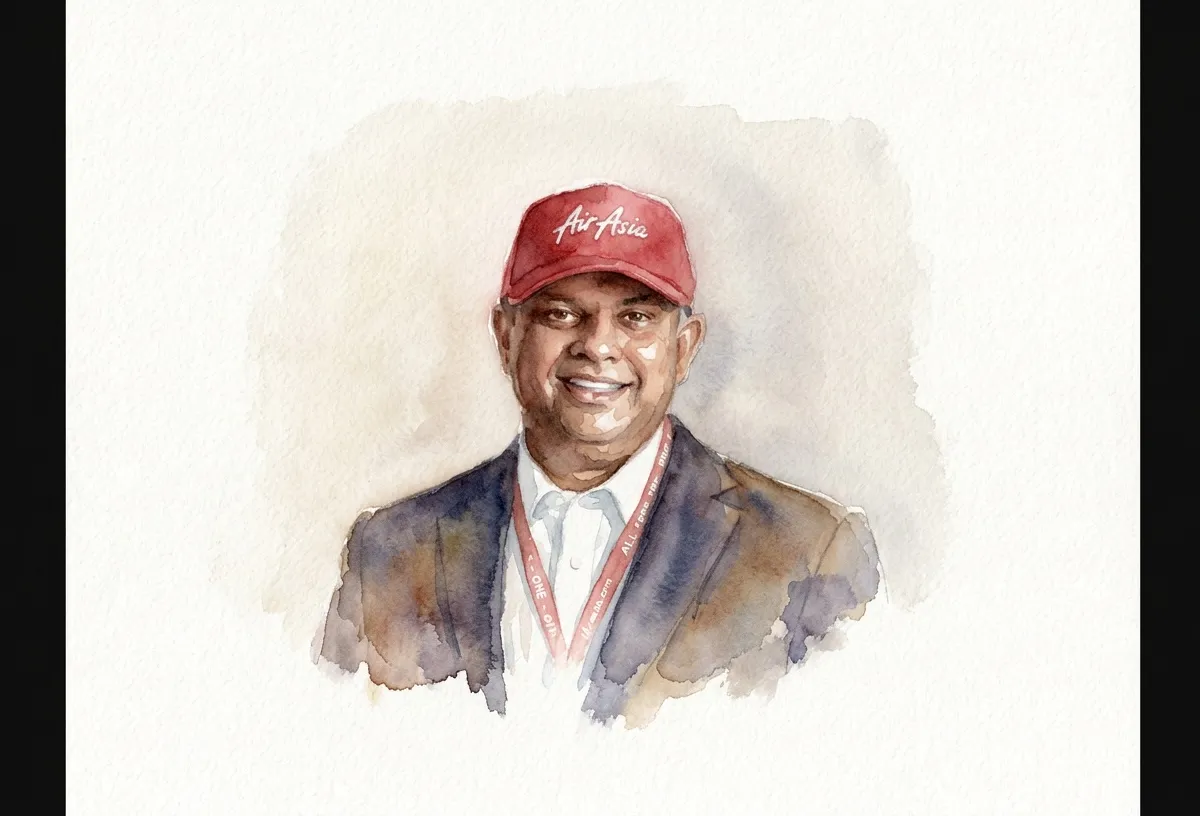
Everyone else is retreating. That's how you know there's an opening.
I've lost count of how many AirAsia flights I've taken between KL and Singapore. That red livery is basically the default airline of Southeast Asia.
Here's what I didn't know until recently:
The guy who built it was running Warner Music in Malaysia. Selling CDs. Zero aviation experience.
Accountant by training. Worked for Branson at Virgin out of university. Climbed to VP of Warner Music Southeast Asia by his late 30s.
But he'd had this idea since watching Southwest Airlines: why can't regular people in Asia afford to fly?
In 2001, he found a government-linked airline called AirAsia. Two planes. RM40 million in debt.
Nobody wanted it.
Tony mortgaged his house and bought the airline for RM1. Twenty-six cents.
The deal closed on September 8, 2001.
Three days later, 9/11. Global aviation collapsed overnight. Airlines went bankrupt. Fuel spiked.
Most people would've tried to undo the deal.
Tony did the opposite.
He stripped the airline to nothing. No meals. No assigned seats. No lounges. One aircraft type. Low-cost terminal. Turned planes around in 25 minutes instead of an hour.
MAS gave you full service. Tony gave you a seat, a seatbelt, and a destination. RM10 fares. Sometimes less.
His tagline: "Now Everyone Can Fly."
An accountant-turned-music-exec running an airline he bought for pocket change, three days before the worst aviation crisis in history? The polite smiles were real.
One year later, AirAsia had cleared all its debt. Turned a profit. Doubled its passengers from 271,000 to 621,000.
By 2008, two planes became seventy-two. Over 150 destinations. The airline nobody wanted for RM1 peaked at $2.8 billion.
Now, AirAsia today isn't what it was. Flight delays are the norm, not the exception. Hidden fees everywhere. An app that tests your patience. Anyone who's flown them recently knows it.
But here's what I keep coming back to:
Tony bought an airline three days before 9/11. With someone else's debt. In someone else's industry. But catastrophic timing meant cheaper planes, cheaper contracts, cheaper deals. Everyone was retreating. Tony walked straight in.
Before him, flying in Southeast Asia was for businesspeople and the wealthy. After him, a student in Penang could fly to Bangkok for less than a bus to Singapore.
The execution has stumbled. But the bet was real.
Sometimes the worst time to start is the only time nobody's competing for the same space.
What's the worst-timed decision you've made that turned out to be the best one?
This is the LinkedIn edit — written to fit inside 3,000 characters. Newer stories are written in full first, and the newsletter gets the whole thing.