Ginvera / Dr. Tor Lam Huat
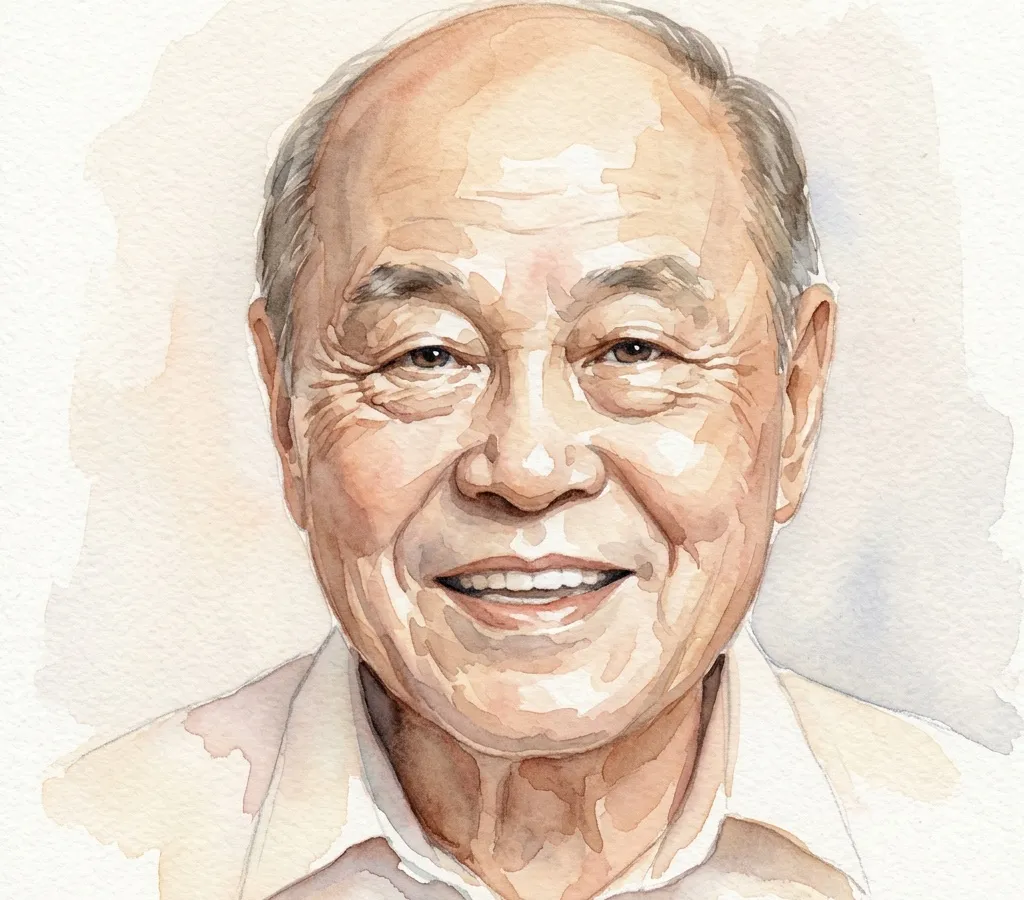
Don't fight the leaders. Create a category they haven't thought of yet.
If you've walked down the skincare aisle at Watsons in Singapore or Malaysia, you've seen it.
Ginvera. Bio-essence. The green tube. The face lifting cream. Chances are one of them is in your bathroom right now.
Here's what I didn't know until recently:
The man who built them was a school dropout who used to sell second-hand cars.
Tor Lam Huat left school to help his father run a provision shop. Then he sold used cars. Then became a building contractor. Then distributed Japanese calculators.
None of this screams "skincare mogul."
In the early 1980s, he got sole distribution rights for a Taiwanese skincare brand called Dearland. Built it into a hit across Singapore and Malaysia. Made his first million.
Then the Taiwanese company looked at his sales numbers and thought: why are we paying this guy?
They pulled his rights. Set up their own office. Cut him out.
So he created his own brand — Firland. Launched it right into the 1985 recession.
Bankrupt.
No credentials. No savings. Just S$5,000 borrowed from relatives.
He launched Ginvera with that borrowed money in 1985.
But here's where it gets interesting.
Tor didn't try to beat L'Oreal and Olay at their own game. He knew it was pointless to attack multinationals head-on.
So instead of making another anti-aging cream, he invented a category that didn't exist.
In 1991, he developed his own "dead skin cell theory" — that regular exfoliation solves most skin problems. No medical degree. Just obsessive testing from a home lab.
From that theory came Ginvera Marvel Gel. It became the #1 product in its category for 16 consecutive years.
Then in 2002, he did it again. Launched Bio-essence with the tagline "face lift without surgery." Nobody was selling face-lifting products at mass-market prices. The multinationals had premium serums. Tor created a new shelf.
Within three years, Bio-essence Face Lifting Cream became the #1 selling skincare product in Singapore. A school dropout's single product outselling every SKU from L'Oreal, Olay, and Neutrogena.
Not by fighting the giants. By going where they weren't.
In 2012, Wipro acquired his company for US$144 million cash.
From S$5,000 borrowed in desperation to a US$144 million exit.
Everyone says study the competition. Find your edge. Fight harder.
Tor didn't fight at all. He built a game the leaders hadn't thought of yet.
When you can't win their game, build your own.
What's a brand in your bathroom you never knew the story behind?
This is the LinkedIn edit — written to fit inside 3,000 characters. Newer stories are written in full first, and the newsletter gets the whole thing.