The first pawnshop on Orchard Road
One man in Singapore sells you your wedding ring. The same man lends you cash against it.
Lee Hwa, in the mall. Maxi-Cash a few doors down. Yellow signboard. Glass front.
Same owner. Both ends.
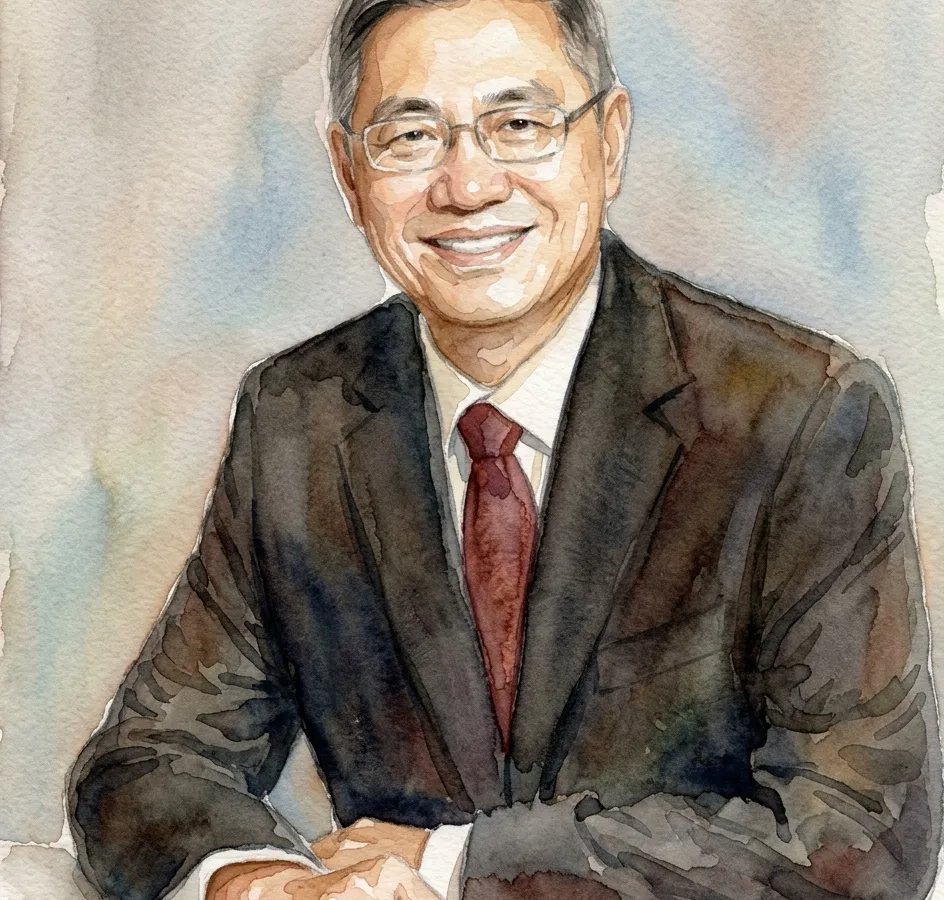
His name is Koh Wee Seng. Few people have heard it.
It starts on Circuit Road, in MacPherson.
November 1970. His mother, Tan Soo Lan, opened a goldsmith. She called it Lee Hwa.
One shop. Yellow gold, mostly. Chains and bangles.
You bought it by weight, as savings rather than jewellery.
Koh was in that shop from the age of eleven.
Not a good business.
Tastes moved. Younger buyers wanted white gold and diamonds, not chains sold on a scale.
The shop only began to break even in 1994.
He took over that year. Some sources say 1995.
Look at what he inherited: one gold shop that had only just stopped losing money.
Four years later, turnover had gone from about S$23 million to S$72 million.
Then he did something no jeweller here had done. He took it public.
That was 1999, and it made him the first jeweller listed in Singapore.
Then came Purple Gold. Eighty per cent gold, alloyed with palladium. A colour nobody else had.
That is the part of the story that gets told.
Here's what I didn't know until recently.
The jewellery is not where the money is.
## Nobody wanted the pawnshops
To see why, remember what a Singapore pawnshop looked like before 2009.
Metal bars, visible from the street.
Giant pillars either side of the door, Chinese lettering down them. A counter you spoke up to.
When a character walked into one on a Channel 8 serial, it was gangsters. Or gamblers. Usually both.
It was a closed trade. You got in through family. Or through clan.
In the 1920s, 22 of Singapore's 25 pawnshops were Hakka-owned.
Abacus until the mid-1980s, and handwritten tickets alongside it. Computers only became compulsory in 1996.
The Pawnbrokers Ordinance dates to 1898, so none of this was untried ground.
Growth was glacial.
Twenty-six shops in 1886. Fifty in 1978. Sixty-nine in 1998.
Twenty years. Nineteen shops.
## The shop on Orchard Road
Koh incorporated Maxi-Cash in 2008.
The first one opened in Ang Mo Kio Central, in February 2009. Bright. Air-conditioned. Glass instead of a grille.
Six months later he opened one on Orchard Road.
Nobody had ever put a pawnshop on Orchard Road. Not once. Not in the street's history.
That is Ion. Takashimaya. The Christmas lights.
He put a place to hock your watch in the middle of it.
Then he hired ambassadors for it. Actresses, television campaigns, and eventually an AI one.
Lee Hwa had an ambassador. Goldheart had one. Now the pawnshop had one as well.
You do not advertise a business people are ashamed of.
That was the whole point.
## Then he listed it
On 22 June 2012, Maxi-Cash listed on the Singapore Exchange.
Singapore's first publicly listed pawnbroker.
Sit with that. This is a trade built on nobody wanting to be seen.
It had a share price, an annual report, and analysts asking questions on a results call.
The industry moved with him.
There were 114 pawnshops in Singapore in 2008. Around 200 by 2013.
In 2012 alone, S$7.1 billion was lent against pledges. 3.9 times the 2008 figure.
MoneyMax listed, then ValueMax. Three chains now hold roughly half the pawnshops in the country.
Then the pawnbroker renamed itself. Maxi-Cash Financial Services Corporation became Aspial Lifestyle Limited.
The move, Koh said, would "transform the group's retail business into a consumer lifestyle powerhouse."
A pawnshop chain. Consumer lifestyle.
Now the mechanics, because here is where the two halves meet.
A pawn loan here is capped at 1.5% a month. Six months to redeem, or you renew by paying the interest.
Miss it and it's forfeited. In Maxi-Cash's own words: "no surplus from disposal will be due to pawner."
The gold is theirs now. Since 2015 it does not even have to go to auction.
So where does it go?
Aspial Lifestyle's 2024 annual report answers that. Not in the glossy front. In a credit-loss footnote.
The wording is dry enough to walk straight past.
The loss, it says, "is expected to be recoverable when the forfeited pledges are subsequently sold to customers under the Group's retail business segment."
The forfeited gold goes to the jewellery counter.
In 2024 the pawnbroking arm booked S$57.2 million of sales to the group's other segments. Internal transfers, eliminated on consolidation.
That is the loop. Sitting in the notes. Audited.
And now the number that tells the story.
In 2024 the retail business turned over S$511.1 million. That is Lee Hwa, Goldheart, Niessing, the Maxi-Cash retail floor. Eighty-seven per cent of group revenue.
Profit before tax: S$20.9 million.
The pawnshops took S$70.5 million. Twelve per cent of revenue.
Profit before tax: S$24.3 million.
Read those again.
The jewellery moved seven times the money. It made less of it.
A year earlier the two halves were level. S$13.8 million from retail. S$13.4 million from the pawnshops.
Then pawnbroking profit jumped 81%. Retail did not.
Some of that is accounting. Pawnbroking books only the interest as revenue. Retail books the selling price.
But the margins are real, and they are not close.
Across the listed pawnbrokers, retailing pre-owned jewellery runs at low single-digit margins. ValueMax's pre-owned arm once did 88% of its revenue and 6% of its profit.
Selling gold is a volume business with a thin edge.
Lending against gold is not.
None of it is free.
The pawnbroking arm carried S$19.7 million of finance costs in 2024. A pledge book is built with borrowed cash.
The parent runs net gearing above three times. In November 2024 they raised another S$35.5 million from shareholders.
A gold hedge cost the group S$8 million in 2025, when the price ran away from them.
Shops close too. One year they wrote off fittings on pawn outlets they had planned to shut.
But it works. Group profit after tax in 2025 came to S$84.4 million. Up 142%.
There are 46 Maxi-Cash outlets in Singapore now. Eighteen more in Malaysia. Dr.Pajak. Dr.Emas.
The pledge book keeps growing.
That is the quiet part. The second half of the loop does not need a good economy.
Gold helped. In June 2024 it sat above US$2,300 an ounce. A year later, above US$3,200.
Singaporeans pawned S$884 million in June 2025 alone. 341,490 pledges. One month.
Look at who walks in. Domestic helpers. Retirees. Hawkers and contractors, short on working capital. People in their twenties.
Not the gamblers from the serial.
"When the economy weakens, the number of pawners tends to rise slightly," ValueMax's managing director said.
There are 241 registered pawnshops in Singapore today.
Here's the thing.
Everyone else in that mall is fighting over one moment. The moment you buy.
Better lighting. Better ambassador. Better tray.
Koh built the other moment. The one where you bring it back.
Stigma was never the obstacle.
It was the reason the business was still lying there. Unclaimed. In an industry that had added nineteen shops in twenty years.
What's the business in your industry that everyone is too proud to touch?