Creative Technology / Sound Blaster
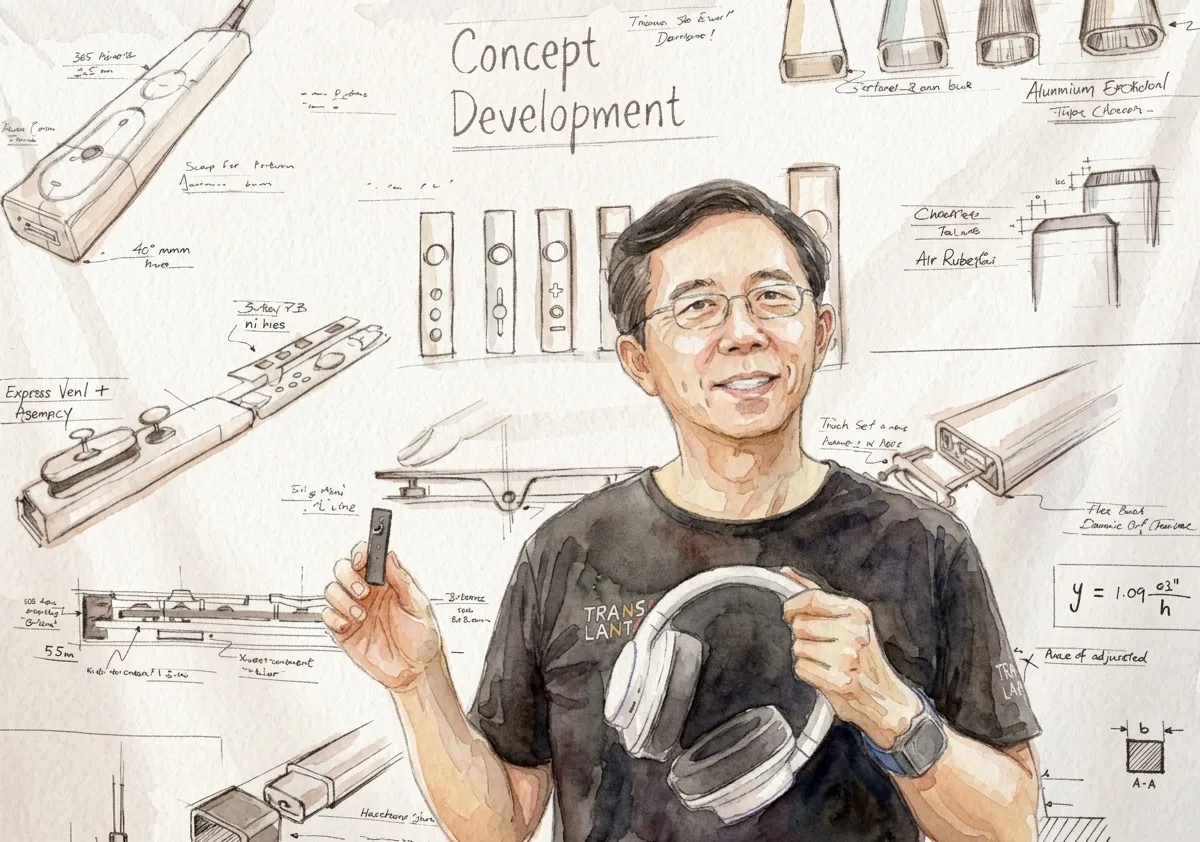
The global standard wasn't set in Silicon Valley. It was set in a Chinatown repair shop.
If you owned a PC in the 90s, you had a Sound Blaster.
The first time a game had real music instead of beeps. The moment your computer became something you actually wanted to use.
Here's what I didn't know until recently:
Sound Blaster was made by a Singaporean. From a repair shop in Chinatown.
In 1981, Sim Wong Hoo and his schoolmate pooled S$10,000 and opened a tiny computer shop in Pearl's Centre. 440 square feet. Sim taught classes on the side to cover rent. Sold Apple II systems. Fixed broken PCs.
But he was obsessed with one thing: why couldn't computers make real sound?
In the 80s, PCs could only beep. One tone. One frequency. Computers were for spreadsheets, not music.
Sim's first attempt was the Cubic CT in 1986 — a full computer with a custom sound board. Half a million dollars in development. It flopped. Nearly killed the company.
But the sound card inside it worked.
Here's where Sim did something nobody in Silicon Valley was doing. Instead of building a whole new system, he pulled the sound card out and made it standalone. A card you slot into any existing PC. Plug and play.
In 1989, he launched Sound Blaster 1.0. Made it compatible with AdLib, the only competitor, so every existing game already worked on it. Then added what AdLib couldn't do: digital audio sampling. Real recorded sound, not just synthesised music.
Same price. Twice the capability. AdLib never recovered.
He flew to Comdex in Las Vegas with a 300-square-foot booth and three cashiers. They sold one Sound Blaster every four minutes. 600 units in five days.
Then Microsoft built the Multimedia PC standard in 1990. The press said they based it on Sound Blaster's specs. Overnight, it wasn't just a product. It was the standard.
Revenue: US$5.4 million in 1989 to US$658 million by 1994. First Singaporean company on NASDAQ. Market cap hit $1.6 billion.
A 440-square-foot repair shop in Chinatown set the global audio standard for every PC on earth. Not Intel. Not Microsoft. Not some Stanford dropout in a garage.
Years later, when Apple launched the iPod, Sim noticed it used a navigation interface suspiciously similar to Creative's Zen player. He sued. Apple paid US$100 million.
Sim Wong Hoo died on 4 January 2023. He was 67. Paying himself S$1 per month.
Here's the thing:
Everyone assumes tech standards are invented in California. Sound Blaster proved the opposite. The global standard for PC audio was built by a guy fixing computers in a Chinatown shopping mall.
He didn't wait for permission from the industry. He made the thing the industry had to respond to.
What's the "standard" in your industry that everyone assumes came from the obvious place?
This is the LinkedIn edit — written to fit inside 3,000 characters. Newer stories are written in full first, and the newsletter gets the whole thing.