He Copied Conveyor-Belt Sushi, Then Threw Out Its Price List
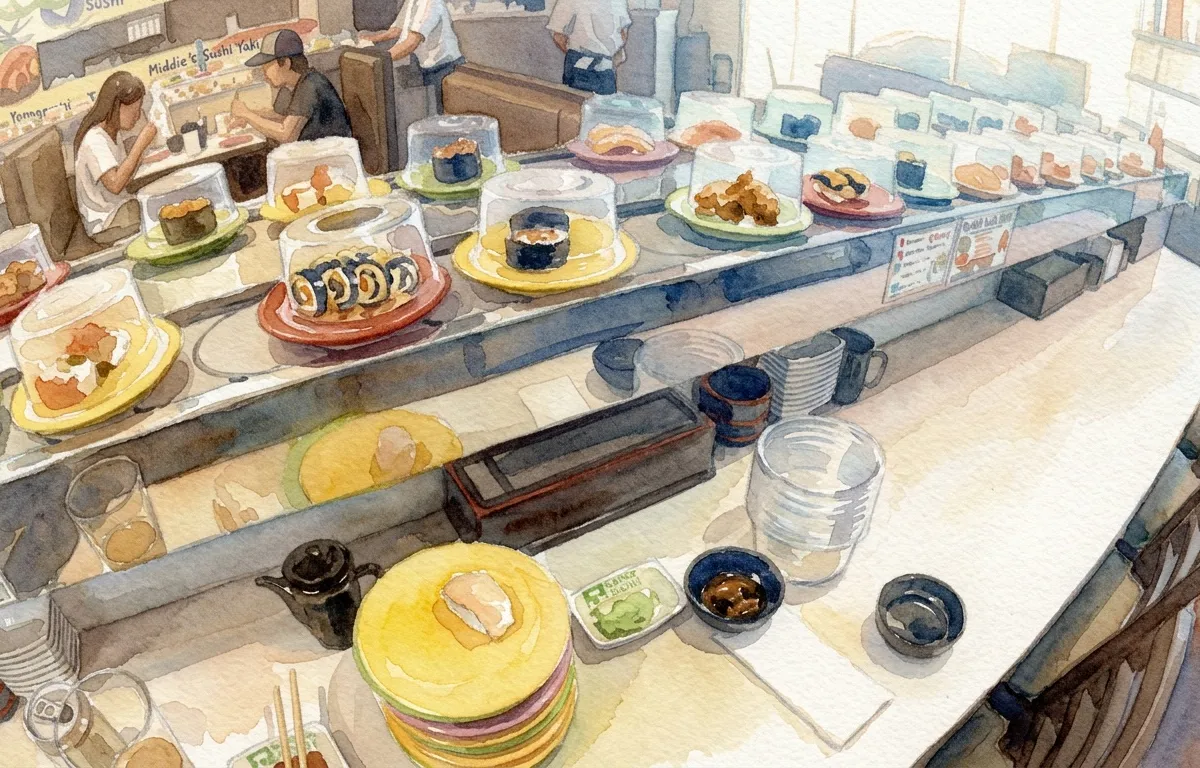
He flew to Japan to copy conveyor-belt sushi, then came home and threw out its pricing. One price for every plate. He took the price tag off the plate to sell more plates.
I remember a time when it was too expensive to fly to Japan for sushi. Sakae brought Japan to Singapore.
The plates going round. The frog on the sign.
Here's what I didn't know until recently.
Almost every plate on that belt carried the same price. In 2005, S$1.90. Only the red ones cost more, at S$6.50.
That was a decision. And it was made by a man in his second business. His first was garments.
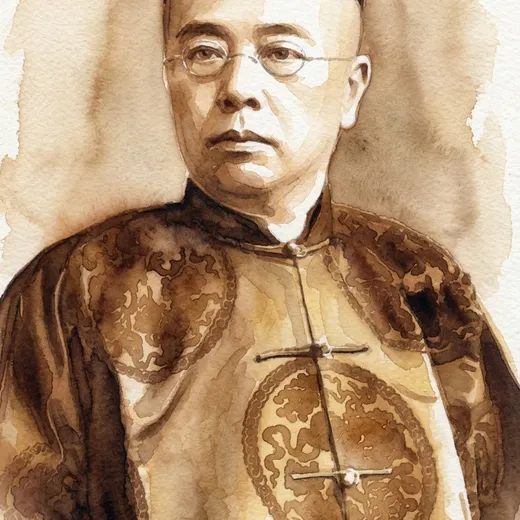
In 1995 Douglas Foo was a marketing executive at the Tokyu Group. A Japanese client he befriended there had an idea. Make garments in India. Sell them into Japan. Foo put in S$100,000 of his own savings. Apex-Pal International was registered in 1996. A factory in India. Fifty workers.
It made a profit in its first year.
So sushi wasn't a rescue. It was a diversification out of something that already worked.
Singapore's National Library tells the next part. Foo's business partner was reluctant to take on the sushi venture, with Japan's economy in a slump. So Foo raised money twice at once.
Once to buy out the partner's share. Once to open a restaurant.
Then Foo went to study the thing he wanted to copy. Frequent trips to Japan and Hong Kong.
Here's how it ran.
Plates came past in different colours, and each colour was a different price. The bill was the stack of empties on the table. That was the standard.
Foo came home. He threw that part out. The National Library gives his reasoning: the colour coding put customers off ordering more.
Every plate is a calculation. Colour, price, running total, decide.
So he took the price off the plate.
One price for everything on the belt, with red kept for premium items. The first Sakae Sushi opened in September 1997, at OUB Centre in Raffles Place.
By the Straits Times' account, Foo's father designed the conveyor-belt delivery system.
Foo Kia Hee was a mechanical and electrical consultant. When his son was ten and running a fever at school, the boy telephoned home for a lift. Foo Kia Hee scolded him for wasting ten cents on the call and told him to walk.
In 2015, at 73, he was still an engineering adviser to Sakae's in-house team.
Foo's plan at the start was six outlets. Revenue went from S$45.2 million in 2004 to S$93.8 million in 2008. By the year to June 2023 the group took S$17.1 million. Sakae Sushi was S$5.0 million of it.
Here's the thing:
Foo copied the model and rejected its pricing.
A visible price grid looks like control handed to the customer. Foo read it as a reason to stop.
He took the price tag off the plate to sell more plates.
You can copy an operating model and still be wrong to copy all of it.
In 2005, two prices on a belt carrying over a hundred kinds of sushi. S$1.90, and S$6.50 for red.
What in your business is just how it's done — and who was the last person to check?
This is the LinkedIn edit — written to fit inside 3,000 characters.