He Paid For Singapore's First Medical School, Then Argued It Should Never Be His
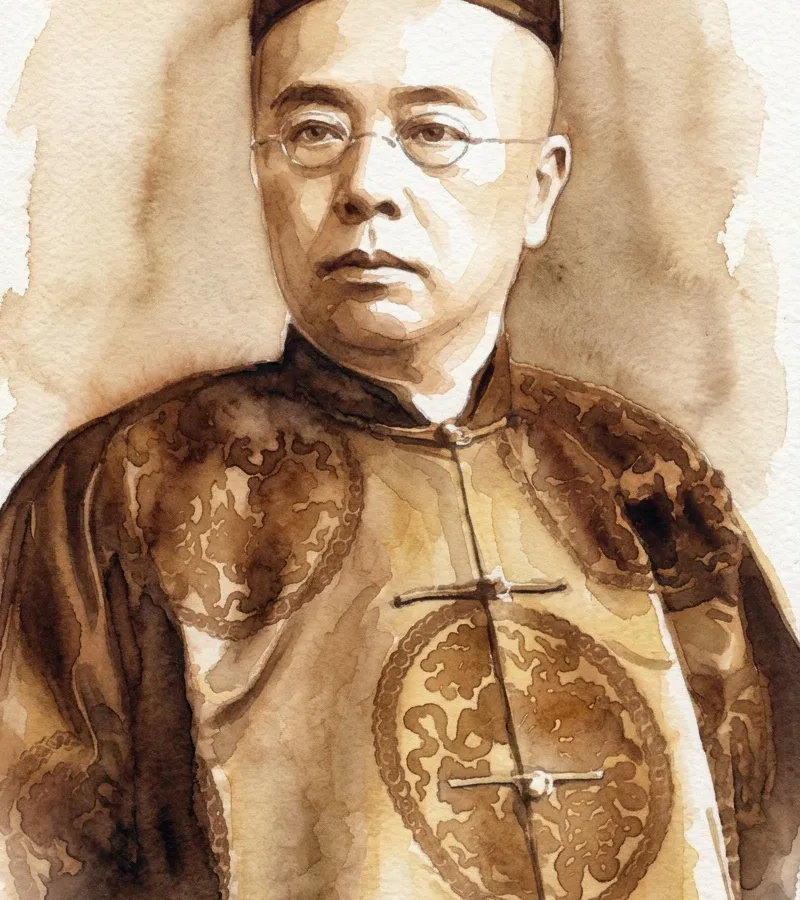
The government's yes was a priced no. He paid it, overshot it, then stood up in the Legislative Council and argued the school must belong entirely to the government — not to the people who had paid for it. He bought the excuse out, then refused the receipt.
I grew up assuming the British built Singapore's first medical school.
They quoted a price for it instead. $71,000, payable by the people who had asked.
Here's what I didn't know until recently:
On 8 September 1904, a merchant named Tan Jiak Kim led a petition to the Governor. The petition asked for a medical school in Singapore. Cost kept many people away from European doctors. So did prejudice. They were "thrown back upon persons with little or no medical training."
There is no money in the document. No offer, no pledge, no figure.
The government replied on 4 October.
The Governor explained why a school would fail. Two reasons. Only about 200 boys a year were qualified to apply. And young men and their parents preferred present income to uncertain future prospects.
The school's success was too problematical, he wrote, without a guarantee — money, and the cooperation of the leading men.
He put a figure on the guarantee. $71,000. Raise it, and he would take the matter to the Legislative Council.
That's a no with an invoice attached.
Tan Jiak Kim paid the invoice.
Ten days after the reply he sent out a circular letter. It asked non-Europeans to subscribe. The final total was $87,077. The ask had been $71,000. $12,000 was his own.
The reply set the terms as well. A vacant block of the old female lunatic asylum. $13,200 a year for staff and upkeep. Converting the block came out of the $71,000.
The school opened in July 1905. Four rooms. A dissecting room, a lecture room, a classroom, an office. Students walked nearly two miles to chemistry classes. Twenty-two enrolled.
It became King Edward VII College of Medicine. Then it was folded into the University of Malaya. Today it is the NUS Yong Loo Lin School of Medicine. NUS counts more than 12,000 graduates since 1905.
Here's the part almost nobody tells.
Tan sat on the Legislative Council himself. On 30 June 1905 the Bill creating the school came up for its second reading. He rose to second it. Then he complained. He could find nothing in the Bill, he said. Nothing that let the government spend public revenue on the school.
"It is very important that an institution of this kind should be entirely under Government."
The Governor agreed on the spot.
Here's what stays with me:
The government had called the school an experiment. Too doubtful to risk public money on. Tan never argued with that. He raised the number instead.
Then he argued it into the government's hands. He wanted the school paid for out of public revenue. Subscriptions run out. Budgets come back every year.
He bought the excuse out. Then he refused the receipt.
The petition is signed "TAN JIAK KIM & OTHERS." The others go unnamed.
What's the last no you accepted that was actually a price?
This is the LinkedIn edit — written to fit inside 3,000 characters.