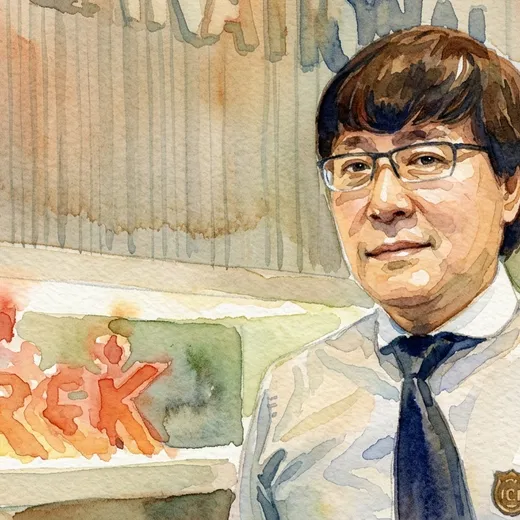
Gunpei Yokoi / Nintendo

The Game Boy won because it was worse. Deliberately worse. Built on technology from the 1970s while every competitor chased cutting-edge.
I must have burned through a hundred AA batteries on my Game Boy.
That chunky grey brick with the pea-green screen. No backlight. No color. Didn't matter. Played Tetris until the lines blurred.
Here's what I didn't know until recently:
The guy who invented it couldn't get hired anywhere else.
Gunpei Yokoi had an electronics degree, mediocre grades, and rejections from every major firm in Japan. Nintendo -- a playing card company -- hired him in 1965 to maintain their card-printing machines.
One day, the president caught him playing with a toy he'd built from spare parts. A little extending arm. Just killing time.
Most bosses would've written him up. Yamauchi told him to ship it. 1.2 million units.
But here's where it gets interesting.
On a bullet train, Yokoi watched a salaryman pressing buttons on his pocket calculator. Just killing time. What if a game could be that small?
Sharp and Casio were in a price war. Surplus calculator LCDs were being dumped cheap. Old tech nobody wanted.
Yokoi put games on them. Game & Watch: 43 million units. Pulled Nintendo out of billions in debt.
He called it "Lateral Thinking with Withered Technology." Don't chase cutting-edge. Use cheap, proven tech everyone else has discarded -- sideways.
Then came the Game Boy. 1989. Already outdated on arrival. 1970s-era processor. Monochrome screen -- because the color version cost three times more and Yokoi said no. Sega had color. Atari had color.
When told a competitor had color, Yokoi said: "Then we're fine."
Color killed batteries in 3-5 hours. The Game Boy lasted 30. Kids don't play for 3 hours. They play everywhere. Cars. Waiting rooms. Under the covers.
118 million units. Every color competitor -- dead.
Here's the painful part.
His only cutting-edge product -- the Virtual Boy -- was rushed to market before he was ready. 770,000 units. They blamed him. He left after 31 years.
A year later, killed in a car accident at 56.
Miyamoto designed his tombstone. The same Miyamoto that Yokoi discovered, mentored, and turned into the most famous game designer alive.
Everyone knows Miyamoto. Almost nobody knows the maintenance worker who built the foundation he stands on.
Every competitor chased the newest technology. Yokoi grabbed the oldest he could find and asked what it could do that nobody had thought of.
Sometimes the biggest advantage isn't being ahead. It's knowing exactly what doesn't matter.
What's a product you loved that everyone said was "inferior"?
This is the LinkedIn edit — written to fit inside 3,000 characters. Newer stories are written in full first, and the newsletter gets the whole thing.
This ran on LinkedIn on 10 April 2026. See the original post · 15 reactions