Ho Kwon Ping / Banyan Tree Hotels
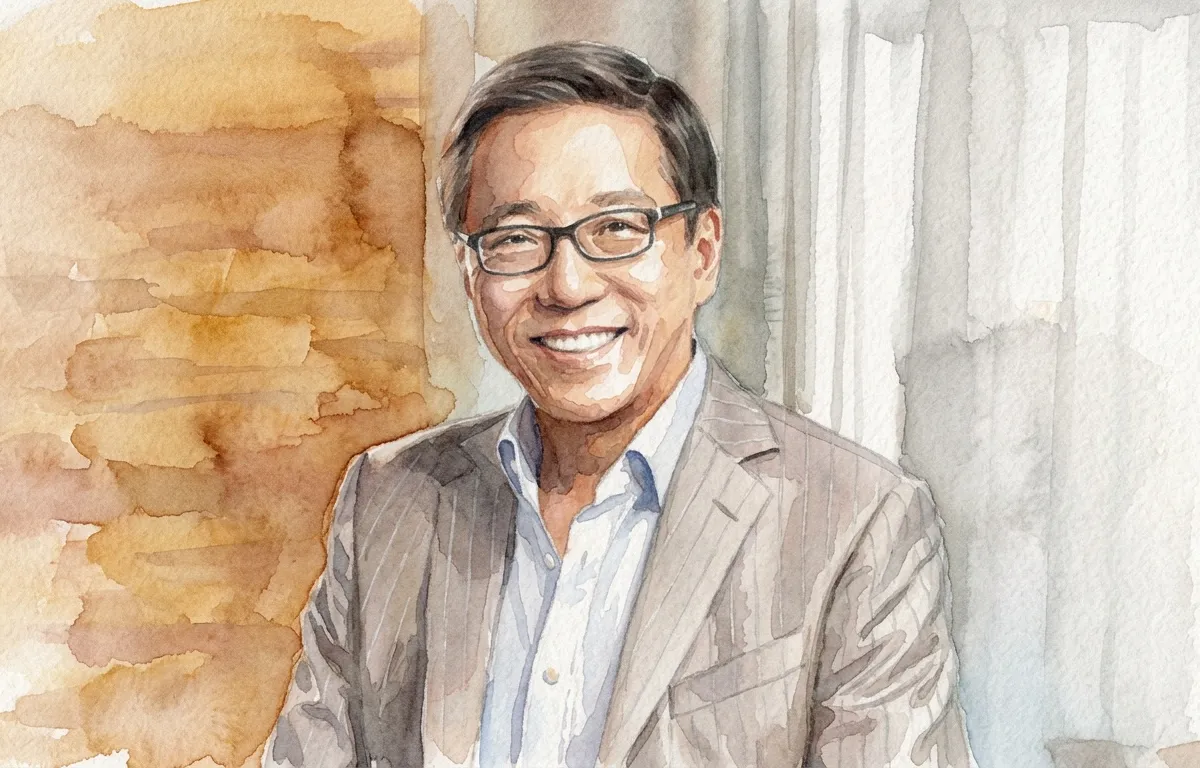
He invented the pool villa because he had no beach. He invented the tropical spa because he ignored the consultants. Banyan Tree was built entirely from things that went wrong.
Banyan Tree is one of the most recognisable luxury hotel brands in Asia. Private pool villas. Spa therapists working barefoot on warm stone. The whole language of high-end resort travel.
Here's how it actually got built.
Ho Kwon Ping was a journalist. In 1977, the Singapore government detained him under the Internal Security Act — two months in solitary confinement, four square metres, lights permanently on. No sense of day or night. He came out, joined his family's trading conglomerate, and nearly bankrupted it by betting on an offshore oil rig that China didn't need.
Then in 1984, he went on holiday in Phuket.
He found hundreds of acres of desolate land — crater pits like pockmarks across the earth, filled with water of an otherworldly cobalt-blue tinge. Strange. Damaged-looking. Cheap. He thought he could do something with it. Being young and naïve, in his own words, he bought it.
Then he researched what he'd actually bought.
The craters were from decades of tin mining. The cobalt blue came from acid contamination. The soil was so degraded almost nothing grew. The UN Development Programme had officially declared the land unrecoverable. Not "difficult." Unrecoverable.
"I felt a little bit foolish," he said.
He couldn't sell it. So he spent three years rehabilitating the land — planting 7,000 eucalyptus and pine trees to detoxify the soil before a single hotel could open. He brought in Dusit Thani to manage one, Sheraton for another, a third operator for the next.
That left him with the worst piece.
One final parcel. No beach access. Every hotel management company he approached said no.
His response: "Well, since nobody wants to manage it... why don't we start our own brand?"
He had no beach, so he put a private pool in every villa. In 1994, this concept did not exist. The all-pool-villa format — now standard at every luxury resort on earth — was invented because Ho had land nobody wanted.
The spa came from the same place. Western consultants told him to copy European spa models. Ho rejected that. He drew on Asian healing traditions — barefoot therapists, local herbs, indigenous treatments. The consultants said barefoot therapists were unhygienic. He kept them anyway.
Two categories that now define luxury hospitality. Both invented to solve a problem, not to capture an opportunity.
Banyan Tree Phuket opened in 1994. The group now runs 91 hotels across 20+ countries. Revenue: S$380 million in FY2024.
Here's the thing that stays with me.
Ho didn't invent the pool villa because he understood what luxury travellers wanted. He invented it because he had land with no beach. He didn't build the Asian spa from a market gap. He ignored the consultants and turned out to be right.
Banyan Tree was built entirely from things that went wrong. The contaminated land. The beachless plot. The management companies that said no.
Every constraint became an invention. Every rejection became a direction.
What have you built from something that went wrong?
This is the LinkedIn edit — written to fit inside 3,000 characters. Newer stories are written in full first, and the newsletter gets the whole thing.