The Apology That Made Him A Case Study Was His Third
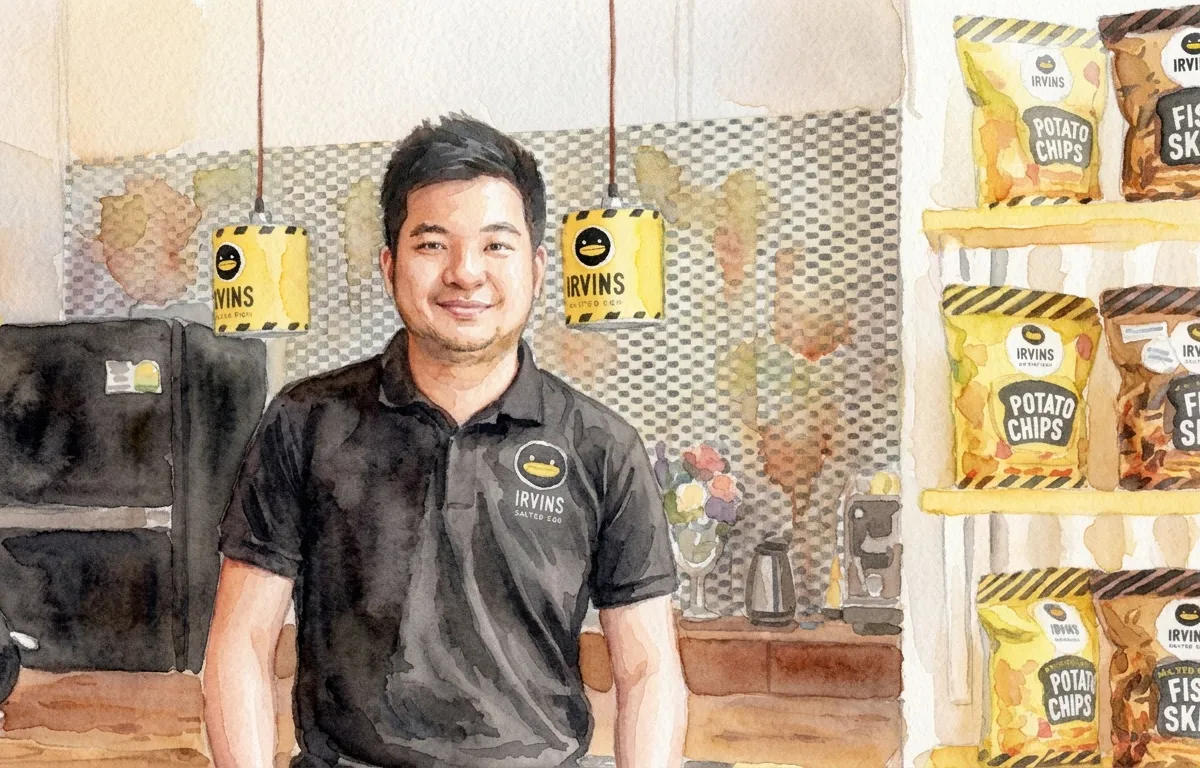
The apology that made him a case study was his third one. The first two were private, and they bought him nothing.
I used to think the IRVINS lizard story had a clean ending. Dead lizard in a bag, fast apology, everyone forgives.
The packet with "Dangerously addictive" printed on the front. Salted egg fish skin. At VivoCity the store capped customers at five large and five small.
Here's what I didn't know until recently:
That apology was his third.
Irvin Gunawan built the thing out of a seafood restaurant. Salted egg crab was the signature dish, so he put the sauce on fried fish skin and sold it in tubs at the cashier counter. Then the queues. He closed the restaurant and opened a store. Three staff became 300. Six countries.
Now the part that got buried.
On 18 March 2018, a customer from Ho Chi Minh City bought fish skin at Changi Airport. Twelve days later his wife found a dead lizard in it. Smaller than a finger.
A pharmacist in Perth had packs sent to her aunt in Kuching. In August her sister found another in the potato chips.
On 31 August 2018, Gunawan emailed both customers himself. Same day. To Ho Chi Minh City: "I have initiated steps to rectify the production so that this will never happen again." To Perth: "We are doing our very best to rectify our food production so that it will never happen again."
Two lizards on his desk in one day. No recall. No public word.
Four months later, in a Bangkok living room, Jane Holloway's brother was halfway through a 700-baht bag when he picked up what he took for a baby salmon head.
It had legs.
She posted the photos on 29 December. "How can this happen?"
The public statement went up on 2 January. He took full responsibility. Every pouch expiring 16 October 2019 recalled worldwide, and refunds for anyone even uncomfortable eating the stuff.
Then this line: "we don't have a full explanation on how the dead lizard ended up in our snack pouch."
A crisis-comms MD's verdict: "They straight up said sorry and consumers forgave them." It became a case study.
The next day, a customer commented underneath it. She'd found a lizard months earlier. Apologies and explanations, she wrote, were both lacking back then.
On 13 February, Yahoo News published the August emails. Gunawan declined to comment.
Here's what keeps coming back to me:
He wrote "never happen again" twice in August, privately, to two people. It bought him nothing. He wrote it again in January, in public, and it bought him a reputation for integrity.
Same man. Same promise. Same problem, four months older.
The market never graded his record. It graded his disclosure.
And most founders sitting on a quiet complaint are running the August playbook right now. It feels like the responsible version. It holds up until somebody else publishes the dates.
IRVINS won a Top Brand award that same year anyway.
What are you handling quietly right now that would read differently with the dates attached?
This is the LinkedIn edit — written to fit inside 3,000 characters.