The Convent That Worked Nights
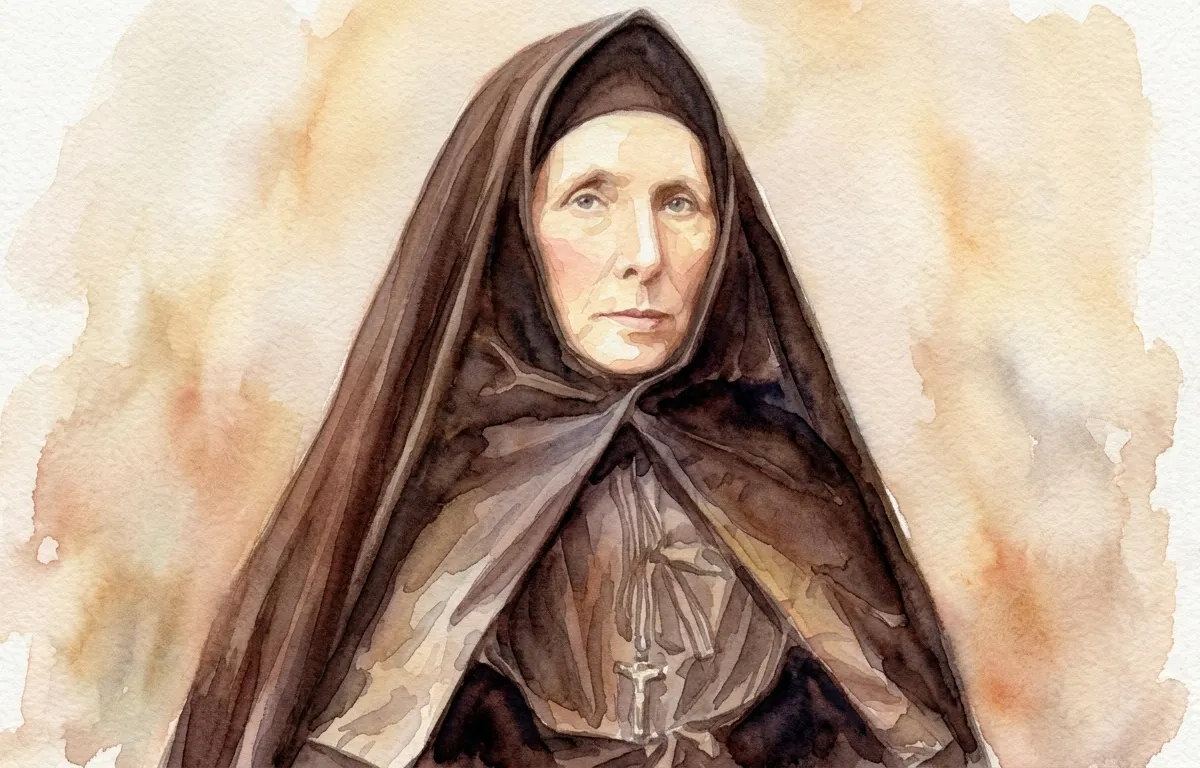
CHIJMES was running a night shift long before the bars arrived. The nuns embroidered from 9pm to midnight and sold the work to rich merchants' wives, because that was the only thing paying for the free class and the babies left at the door. The engine that funds the mission almost never looks like the mission — and she built both on the same day.
I can picture CHIJMES without trying. The white chapel. The courtyard. The restaurants and the bars.
Most people in Singapore can.
Here's what I didn't know until recently:
The first night shift on that corner started in 1854.
A French nun ran it. Mathilde Raclot landed on a Sunday morning in February with three other sisters, at a house on Victoria Street that had been bought for them the year before.
The house had one bed. Two mats, two chairs, two stools. One saucepan for tea, coffee and curry.
They got a sung Mass, incense and speeches. Then everyone went home and nobody fed them until a parishioner turned up that evening.
She wrote to Paris: "Hymns, flowers and complimentary speeches are all very fine, no doubt, but not very filling."
Ten days later she opened the school.
Thirty-nine children. Fourteen paying fees, nine boarders, sixteen orphans.
Two classes from the first morning. One fee-paying. One free, for the orphans and the poor.
Now look at the market she was selling into. Fewer than 200 Europeans lived in Singapore then. Few of them Catholic.
No salary. No government money. The paying class was never going to carry the free one.
So the sisters worked nights.
After prayers at 9pm they sat at the work table and embroidered by oil lamp until the clock struck midnight. They sold the work to the wives of rich Chinese merchants. The congregation's own biography titles that chapter "The Night Club."
By 1862 the school had 145 girls. 82 of them couldn't pay. Needlework and imported French goods were bringing in roughly $10,000 a year.
Then the doorstep started filling up.
Day-old babies, wrapped in rags or newspaper, left in the dark, found by the sisters in the morning. Mostly girls. Girls born in the Year of the Tiger most of all, because they were believed to bring bad luck.
The sisters took every one. Most arrived with nothing to identify them, so the nuns gave them names. Around 200 children by 1892. Around 400 by 1936.
None of that had a funding line. It had a needle, a lamp, and a merchant's wife who wanted something embroidered.
Here's what stays with me:
Everyone wants the mission funded. Almost nobody designs the thing that funds it.
She designed it on day one. Not after scale. Not after a donor. The paying class existed so the free class could exist, and she closed the gap that was left with her own hands, at 11pm.
The chapel said its last mass on 3 November 1983 and was deconsecrated before the site changed hands. The orphanage closed that year too, after 129 years. Eleven CHIJ schools carry the work today.
She went into the Singapore Women's Hall of Fame in 2014, two hundred years after she was born. I'd never heard of her.
What's actually paying for the part of your work you care about — and did you design that on purpose?
This is the LinkedIn edit — written to fit inside 3,000 characters.