He'd Already Run A Bank The Depression Dissolved. Then He Started Another One.
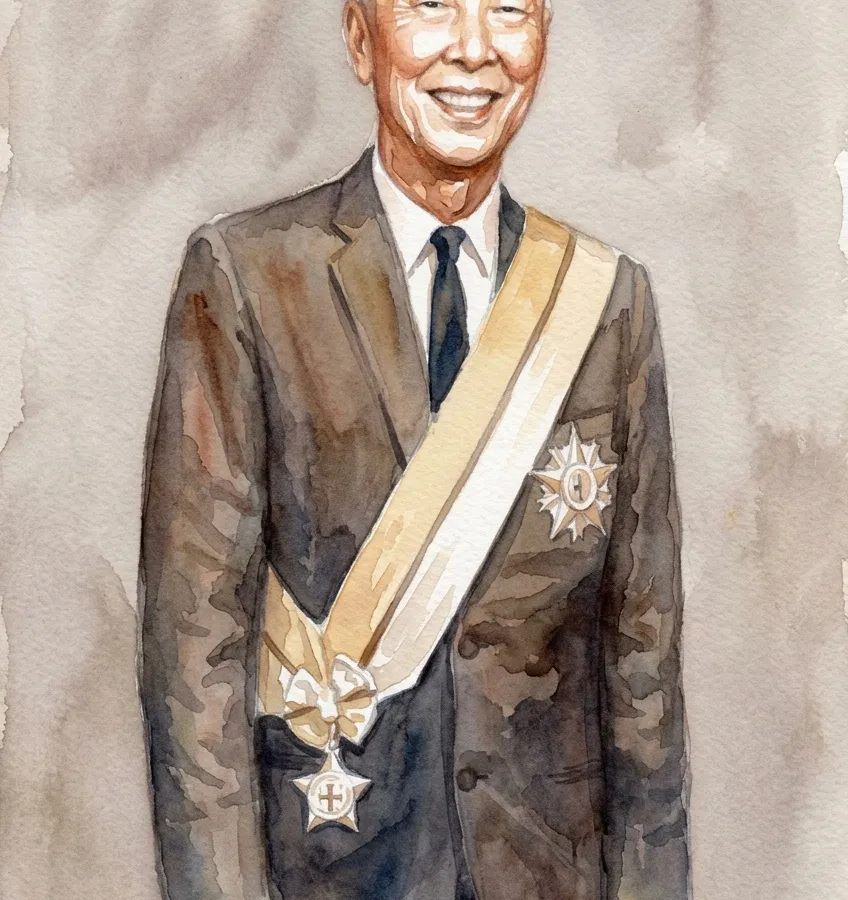
He managed a bank the Great Depression dissolved, then founded one in the middle of the same Depression — and ran it at a single office for 24 years. The collapse he lived through was the qualification, not the warning.
I've walked past UOB branches my whole life.
I couldn't have told you who founded it.
Here's what I didn't know until recently:
The man who did also founded the bank that became CIMB. One boy from Kuching.
His name was Wee Kheng Chiang.
Born there in 1890. His father died when he was a boy. His widowed mother sent him away to China. He came back to Sarawak at 15 with a primary education at best.
At 16 he started school.
St Thomas's, Kuching. Sarawak had no age limits on schooling. So a near-grown man sat down beside children and learned English. It got him a clerk's job at the Borneo Company, the most prestigious employer in Sarawak.
Then came the break nobody puts in a founder story.
Ong Tiang Swee, the wealthiest Chinese man in Kuching, liked the young clerk and gave him his eldest daughter in marriage. With her came a job. Manager of Ong's bank, the Sarawak Chinese Banking Corporation, the first Chinese bank in Sarawak.
By 1924 Wee had founded his own in Kuching. Bian Chiang Bank.
Then the Depression came for the banks.
December 1932: three of Singapore's Chinese banks were folded into one, the Oversea-Chinese Banking Corporation, $10,000,000 paid-up. That merger wasn't ambition. It was survival.
And his father-in-law's bank, the first Chinese bank in Sarawak, the one Wee had managed, was dissolved by the Depression.
On 6 August 1935, in the sixth year of the slump, seven Hokkien businessmen incorporated a new one. United Chinese Bank. Paid-up capital S$1 million. Wee, the merchant from Sarawak, was the largest shareholder and the first chairman.
It opened on 1 October 1935 in rented premises in the Bonham Building at Boat Quay. One office. Short-term loans to local Hokkien merchants. Its opening brought the number of Chinese banks in Singapore to four.
Then he did nothing quickly for 24 years.
The second branch came in 1959, at Beach Road. In 1965 the name changed to United Overseas Bank.
In 1974 a 30-storey tower opened on the site of the rented Bonham Building. It stands there now as UOB Plaza 2.
UOB today runs more than 500 branches and offices. Bian Chiang was sold in 1975, renamed, merged, and is the root of CIMB Group: RM602 billion in assets.
Here's what stays with me:
Most people treat a failure they lived through as the reason to stay out.
He had every reason to. He'd run a bank the Depression dissolved. Singapore's Chinese banks had just merged to survive. Every recent lesson said the same thing. Not now.
Nobody wrote down his reasoning. But look at how he ran the thing. One office. Short-term loans. Merchants he knew. For 24 years. He entered at the worst moment and then moved at the slowest speed available.
Most of us do it the other way round. We wait for a good year to start, then sprint.
What have you ruled out because you watched it fail up close?
This is the LinkedIn edit — written to fit inside 3,000 characters.