NEWater
When you can't control the supply, eliminate the need for one.
In 1965, Singapore was kicked out of Malaysia.
No resources. No military. No hinterland. And one terrifying vulnerability nobody wanted to say out loud.
Water.
Almost all of Singapore's water came from the state of Johor in Malaysia — piped across a causeway under colonial-era agreements.
Malaysia's Prime Minister said it plainly: "If Singapore's foreign policy is prejudicial to Malaysia's interests, we could always bring pressure to bear on them by threatening to turn off the water in Johor."
Not a metaphor. Not a negotiation tactic. A survival threat.
Lee Kuan Yew's response? "Every other policy has to bend at the knees for our water survival."
In 1972, Singapore launched a Water Master Plan. By 1974, they'd built a pilot plant to recycle used water into drinking water.
It failed. The technology was too expensive and too unreliable. They shut it down.
For twenty-four years, the idea sat on a shelf. Singapore kept paying Malaysia for water. And Malaysia kept reminding them who held the tap.
Then in 1998, membrane technology finally caught up. Singapore dusted off the old plan and commissioned a new study. Could they actually turn sewage into water clean enough to drink?
The answer was yes. Not just drinkable — ultra-pure. Cleaner than tap water. Clean enough for semiconductor wafer fabrication.
They called it NEWater.
But here's the problem nobody expected: how do you convince 4 million people to drink recycled sewage?
Singapore's answer was audacious.
At the 2002 National Day Parade, Prime Minister Goh Chok Tong stood in front of 60,000 people and raised a bottle of NEWater in a toast. To Singapore.
The subtext was unmistakable. Patriotic Singaporeans drink their own recycled water.
Not everyone was convinced. Someone wrote a parody of the national song "Count on Me, Singapore." The new version? "Drink Our Pee, Singapore."
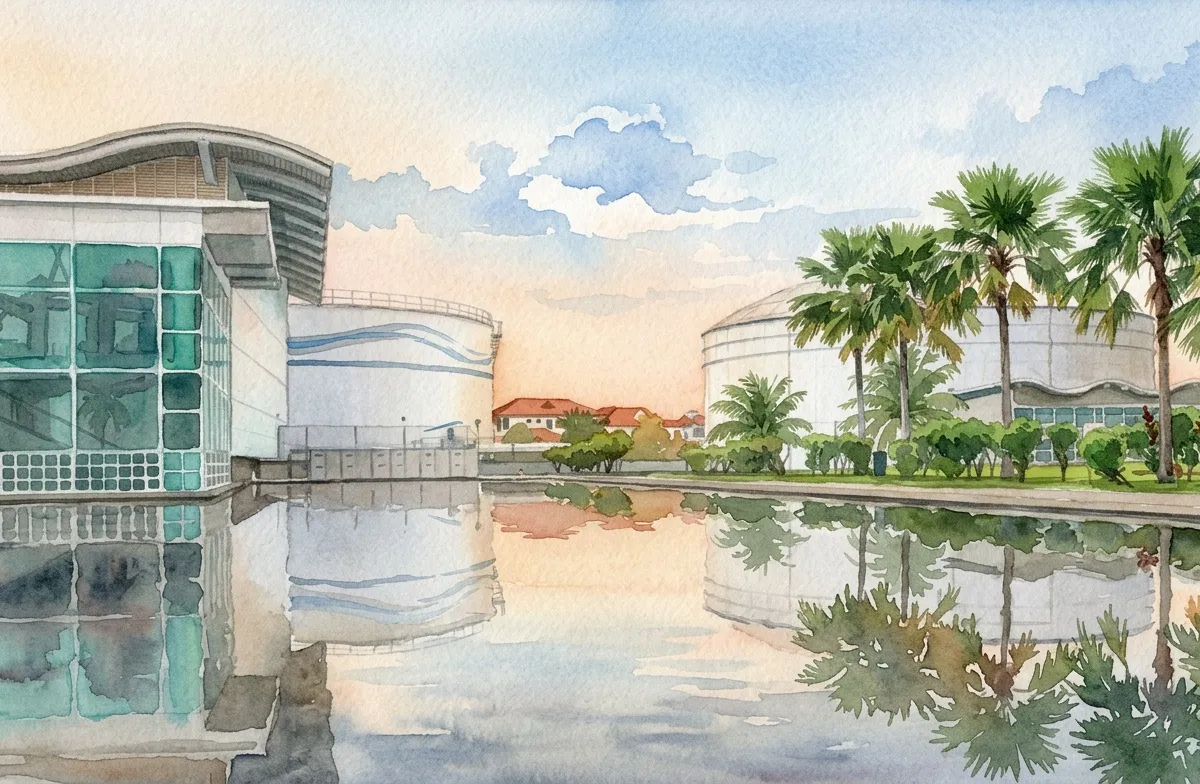
PUB didn't flinch. They rebranded sewage plants as "water reclamation factories." They stopped saying "wastewater" and started saying "used water." They built visitor centres to show the process. They invited every grassroots leader and MP to tour the plants.
And they kept building.
Today, NEWater meets 40% of Singapore's water needs. By 2060, it's projected to meet 55%. The water agreement with Malaysia expires in 2061.
That's not a coincidence.
Singapore didn't just solve a water problem. They built an entire industry around it. Over 150 water companies. 26 R&D centres. A water sector contributing over $2 billion to GDP. The country that once begged for water now exports water technology to the world.
Here's the business lesson:
Most people see dependency and try to negotiate better terms. More supply. Lower price. A longer contract.
Singapore looked at its single greatest vulnerability — a neighbour who could turn off the tap at any time — and asked a completely different question: What if we didn't need the tap at all?
They couldn't control the source.
So they eliminated the need for one.
This is the LinkedIn edit — written to fit inside 3,000 characters. Newer stories are written in full first, and the newsletter gets the whole thing.