Four Hundred Grams
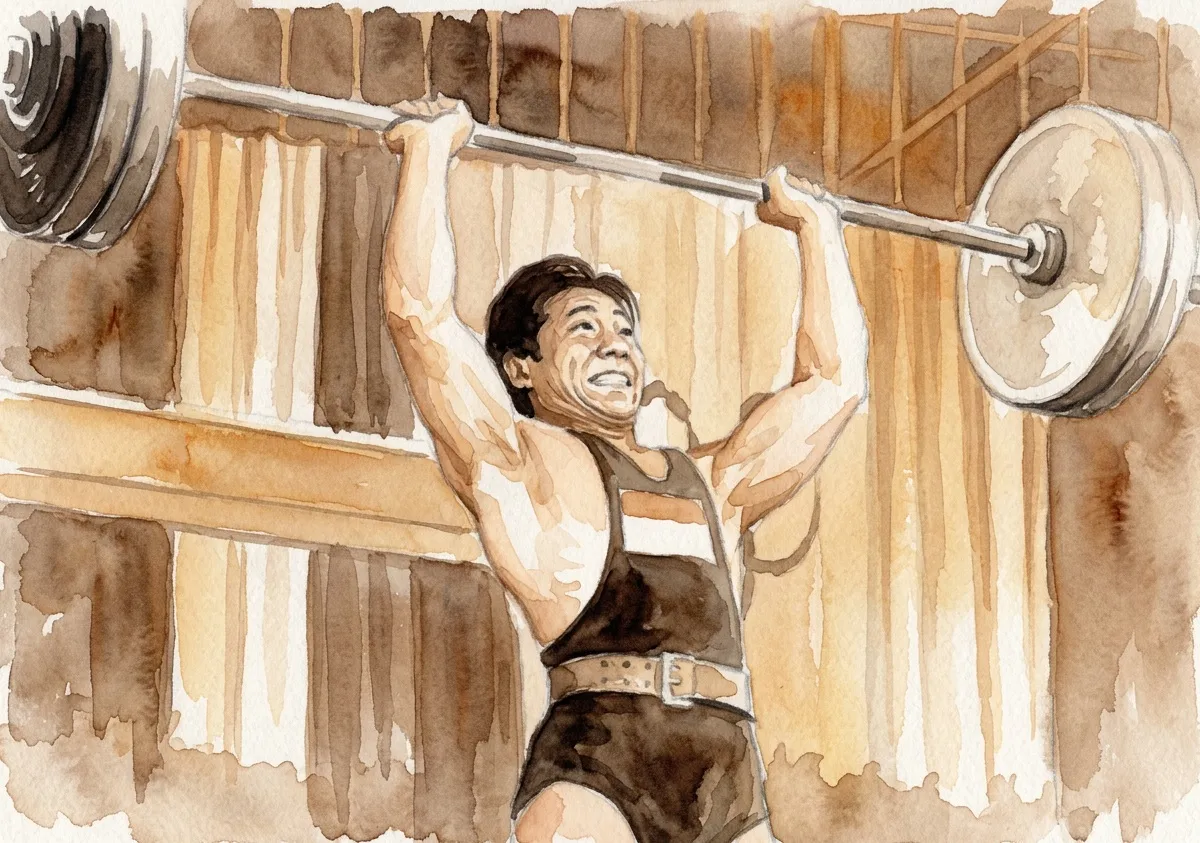
The margin that wins is usually invisible, and usually expensive — he took Singapore's first Olympic medal by 400 grams of bodyweight, bought with a five-day weight cut that is also the most likely reason his legs seized during the ninety-minute wait for his final lift.
I grew up hearing that Singapore's first Olympic medal was won on one heroic lift.
The lift is real. Tan Howe Liang put 155 kg over his head. Both his legs had seized while he waited.
It just isn't where the medal was won.
Here's what I didn't know until recently:
Rome, 8 September 1960. Tan finished the lightweight final on 380.0 kg. So did Abdul Wahid Aziz of Iraq. Identical totals. The rules broke ties by lightest bodyweight. Tan weighed 66.9 kg. Aziz weighed 67.3.
Four hundred grams. About a can of drink.
Here's where those 400 grams came from.
Tan landed in Rome two pounds over the 67.5 kg limit. He had five days to lose it without losing strength. On the morning of the contest he weighed in at 66.9 kg.
Not a lift. A scale, in a room, before anyone was watching.
He had been paying for things nobody watched his whole life. He trained in a back alley near Boat Quay. One set of barbells. Fifty cents a month to the club.
He snatched 110 kg and climbed to fourth. One lift left. Gold was gone. Silver was live.
Then he sat down on a settee to wait ninety minutes for the clean and jerk.
Both legs seized.
"My legs. My legs are cramped."
His manager, Chua Tian Teck, tried to rub the legs and Tan screamed. His team wanted to take him to the Olympic village hospital. Going meant withdrawing, and withdrawing meant losing the silver.
"No, no, I don't want to go. Don't take me away from here."
Two doctors examined him and found nothing wrong. Let him rest, they told Chua.
The cramp eased about half an hour before his turn. He didn't just decide to be brave. He tested first. Clean and jerk. Up to 260 pounds. Then: "All right, Uncle, I am ready to try."
Fifteen minutes left. Last man to lift.
He cleaned 331 pounds, stood up with it, blacked out. Two attendants caught him.
"Uncle, how much do you want me to carry for the silver?" Chua said 342.5 pounds. Tan looked at him and said: "I will, I must."
He lifted it. Officially, that's 155 kg at a bodyweight of 66.9. Best clean and jerk in the field. An Olympic record by five kilos.
Here's the part that stays with me:
Cutting weight dehydrates you. The five days that bought him those 400 grams are the most likely reason his legs seized on that settee. The edge and the near-disaster had the same parent.
Every edge you engineer is bought somewhere. The bill rarely arrives where you're looking.
Four years later in Tokyo, a class heavier and lifting for Malaysia, he totalled 400 kg — twenty kilos more than the total that won him silver — and finished eleventh of nineteen. Better numbers. No medal.
Singapore's first Olympic medal, and the country waited 48 years for the next one. It turned on four hundred grams nobody was watching.
What's the unglamorous thing giving you your margin right now — and what is it costing you that you haven't counted?
This is the LinkedIn edit — written to fit inside 3,000 characters.