Haw Par Villa / Tiger Balm
He gave away half his profits. That's why you know his name.
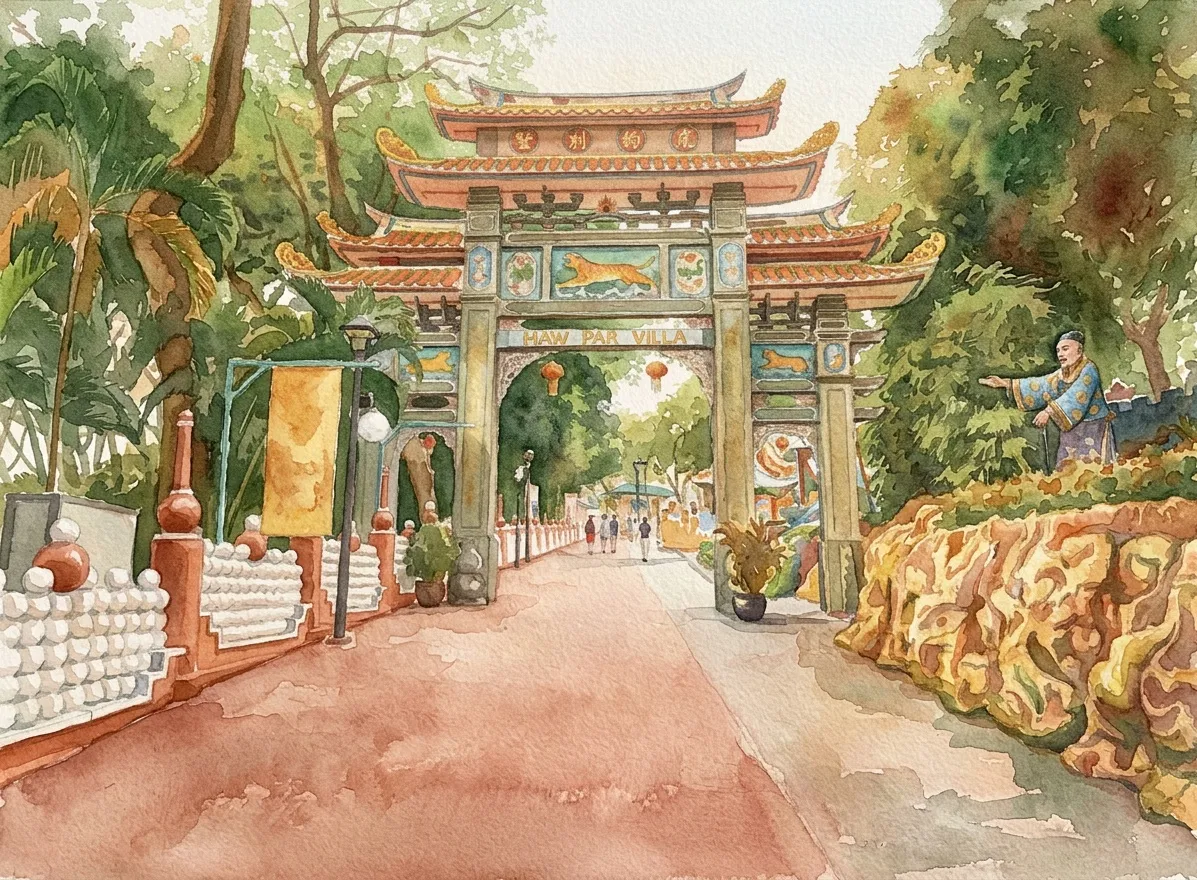
Every CNY when I was a kid, we'd pile into the car and head to Haw Par Villa.
The giant statues. The Ten Courts of Hell. My cousins daring each other to look at the dioramas showing what happens if you lie to your parents.
Free admission. Always packed. Every Singaporean kid went at least once.
Here's what I didn't know until recently:
The guy who built it wrote into his company charter that up to 50% of annual profits had to go to charity.
Not could. Had to.
Aw Boon Haw. The "gentle tiger" behind Tiger Balm.
His father was a herbalist in Rangoon who died suddenly in 1908, leaving behind a small apothecary and two sons. Boon Haw came back from China, and the brothers spent months in their mother's kitchen perfecting their late father's herbal recipe.
By 1909, they had it. "Ban Kim Ewe" — Ten Thousand Golden Oils. Boon Haw trademarked it after himself.
Tiger Balm.
By 1918, they were among the wealthiest families in Rangoon. Most people would've stopped there.
Boon Haw did the opposite. Free public gardens across Asia. Schools. Hospitals. 11 newspapers in 7 cities — not to make money, but to promote Tiger Balm and Chinese culture.
And the crown jewel: Haw Par Villa. Over 1,000 statues. 150 giant dioramas teaching Chinese folklore and values.
Completely free.
Most businesspeople would think: "You're leaving money on the table. Charge admission."
Boon Haw saw something else entirely. The free theme park wasn't charity. It was the world's largest Tiger Balm billboard.
By the 1970s, Haw Par Villa was pulling over a million visitors a year. Every one of them walked away associating Tiger Balm with Chinese heritage. With their childhood. With their parents teaching them right from wrong.
You can't buy that kind of brand loyalty.
Here's the thing:
Most companies optimize for profit margins. Boon Haw optimized for something else entirely.
He gave away half his profits. That's why every household in Asia still has a tin of Tiger Balm. That's why Haw Par Villa is a national heritage site. That's why, 116 years later, you still know his name.
What's something from your childhood CNY that you're now buying for your own kids?
This is the LinkedIn edit — written to fit inside 3,000 characters. Newer stories are written in full first, and the newsletter gets the whole thing.