LVMH Didn't Buy a Fashion House. It Bought a Crocodile Tannery on Defu Lane.
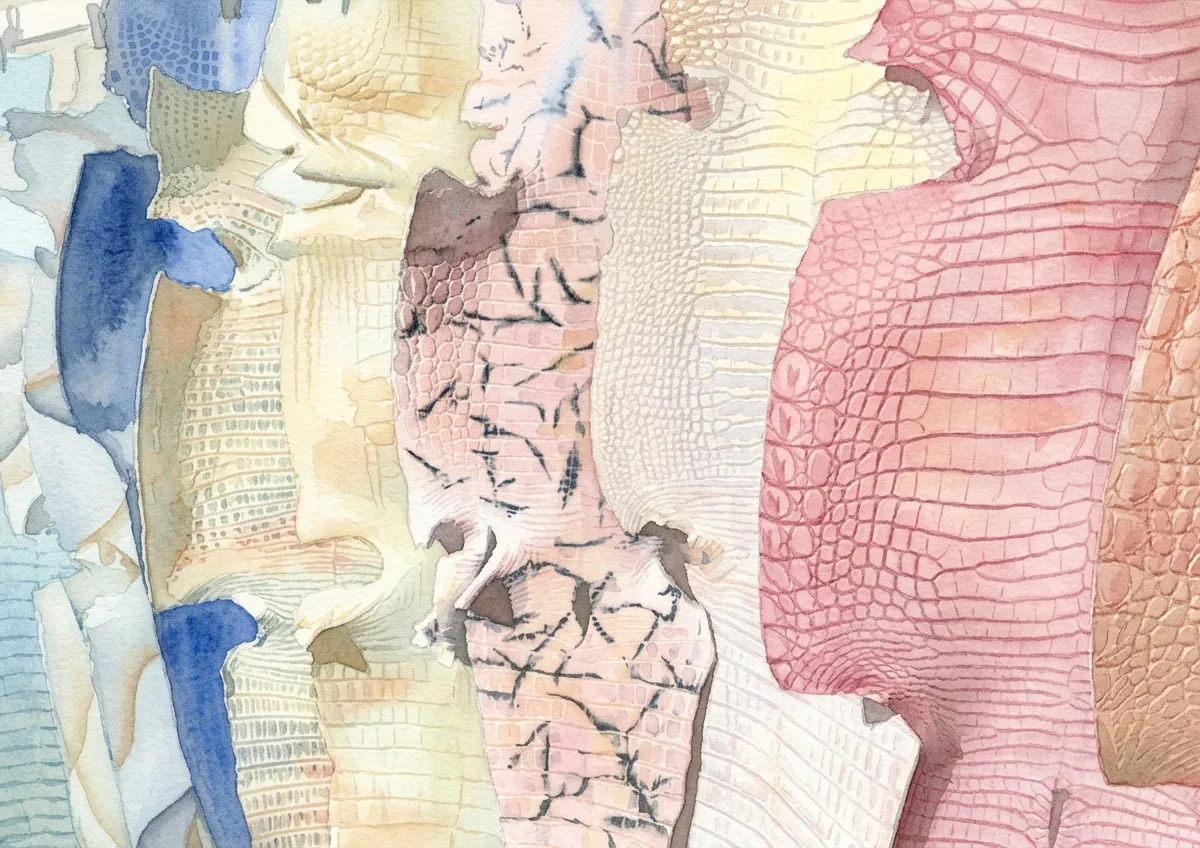
LVMH didn't buy a fashion house in Singapore. It bought a tannery — the ugliest point in the luxury chain — because that's where the scarce thing was. Own the scarce input, not the visible output.
I used to think LVMH grew by buying fashion houses.
In 2011 it bought a crocodile tannery in a Singapore industrial estate.
Heng Long. Two units on Defu Lane, run by Koh Chon Tong and his family. Ethan Koh, of the founding family, grew up beside its Kovan tannery. He says the air there smelled of salted fish.
Here's what I didn't know until recently:
Heng Long did one thing. It took raw crocodilian skins and turned them into crust, then finished leather. Belly, hornback, backstrap. More than 2,000 colours on its product list.
None of that is scarce. Tanning is a skill, and skills can be hired.
The skins are scarce.
The skins trade is regulated by CITES. In Heng Long's own words, that makes it "highly controlled with limited supply from the world's population of crocodilians."
You can build a bigger factory. You can't build more crocodilians.
Heng Long listed on SGX in July 2008. Its own investor disclosures called it one of the five top-tier crocodilian tanneries in the world. Its own directors said those five bought most of the high-end skins.
Five. In the whole world.
LVMH was already a customer. LVMH's own 2011 announcement calls Heng Long a supplier to luxury manufacturers globally, "including LVMH".
It could keep buying from one of five. Or it could own one of the five.
The offer was S$160.8 million for all of Heng Long, made through a holding company. The Koh family held about 74% and agreed to sell all of it. Then they put a substantial portion of the proceeds back into the holding company. LVMH ended up owning 51% of it. The family kept 49%.
LVMH's own accounts put its side at €47 million. S$82 million.
Heng Long delisted in December 2011. Then LVMH kept going upstream. By its 2023 filings it owned all of the holding company. Underneath sat companies in Italy and Sydney, and in Florida, Cypress Creek Farms and The Florida Alligator Company.
LVMH bought the tannery. Then it bought the farms.
The skins come from crocodile and alligator farms. The animals are killed for them. PETA wrote to Louis Vuitton in 2020 naming Heng Long. Koh Chon Tong had defended the trade on the record in 2019.
Heng Long was one of five, not the only one. Hermès owns its own tanneries. LVMH went out and bought one.
Here's what stays with me:
Everybody builds toward the visible end. The brand. The shop. The name on the bag.
The visible end is where the competition is. The scarce end is where the leverage is.
A supplier gets negotiated with. A bottleneck gets bought.
€47 million for half a tannery on Defu Lane. LVMH's release said the partnership would "strategically complement LVMH in the procurement of high quality crocodilian skins."
What's the least glamorous input your business runs on — and what happens the day one of your customers decides to own it?
This is the LinkedIn edit — written to fit inside 3,000 characters.