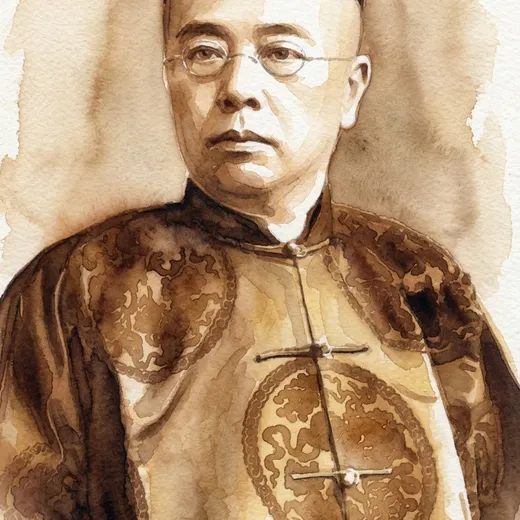
ShopBack / Henry Chan

The billion-dollar company was built by a man whose bank account hit zero -- and whose family didn't know he'd quit his job.
I use ShopBack the way most people do. Open the app before buying anything online, tap through, get a few percent back. It's muscle memory now.
Here's what I didn't know until recently: the guy who built it was hiding the whole thing from his family.
Henry Chan and five friends from Zalora pooled $30,000 and tried to build an e-commerce company. Attempt one was a flash sale site. Merchants liked the traffic spikes but hated the feast-or-famine rhythm. It died within weeks.
Attempt two was a three-month discount platform. Better marketing, longer runway. But the deep discounts destroyed merchant margins. Nobody wanted to participate.
Two failures in under a year. Government funding application rejected. Henry's savings account hit literally zero dollars. And his family still didn't know he'd left his job.
But here's where it gets interesting.
That desperation forced the sharpest thinking. Henry and his co-founder Joel sat in a car one night and flipped the entire model. Instead of asking merchants to sacrifice margin on discounts, they'd charge merchants only when a sale actually happened. Cost-per-sale. Risk-free. Then they'd pass a slice of that commission back to shoppers as cashback.
The deals got smaller. 3-6% back instead of 50% flash sale discounts. On paper, less exciting for consumers. In reality, infinitely more sustainable for merchants and infinitely more habit-forming for shoppers.
Everyone else was racing to offer bigger deals. ShopBack made the deals smaller.
That's why it worked.
First customer bought something two hours after the site went live. Within a year, monthly transactions were growing 20-30%. Henry described it as "not normal."
Think about that for a second. The same person whose bank account was at zero, who couldn't tell his own family what he was doing, built a platform that's now paid out over S$1 billion in cashback across 13 markets. $1.4 billion valuation.
But the story has a twist. In 2024, Henry publicly admitted he'd made the exact same mistake that nearly killed them in 2014 -- chasing too many directions, expanding too fast. He laid off 24% of his team and killed their buy-now-pay-later product.
The same lesson, ten years apart.
Sometimes the hardest part of building something isn't finding the right model. It's remembering why the first one worked -- and that smaller was always the answer.
Have you ever had to relearn a lesson you thought you'd already figured out?
This is the LinkedIn edit — written to fit inside 3,000 characters.