The Merchant Who Made His Best Asset Impossible To Sell
The principal Arab merchant of a new free port deliberately made his best asset permanently unsellable — the wakaf over his Kampong Malacca mosque, which Muis calls the first in Singapore, is the only thing he owned that his family could not lose.
Aljunied is an MRT station and a GRC. For years I read that name as a place.
Aljunied was a man. He took his best piece of land off the market. On purpose. Permanently. In a free port whose entire selling point was that everything moves.
Here's what I didn't know until recently.
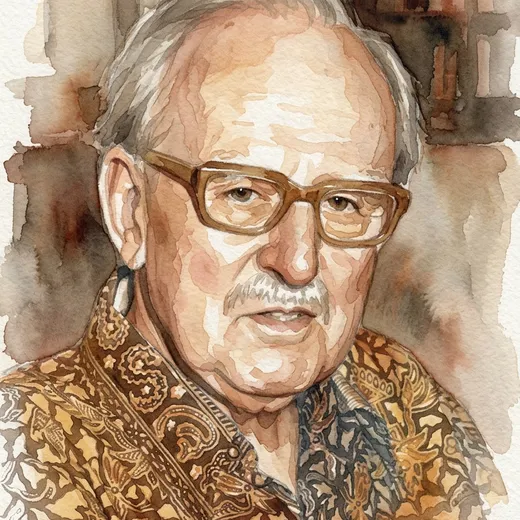
Syed Omar bin Ali Aljunied was born in Hadhramaut in 1792. He traded at Palembang. Then Penang. He moved to Singapore around 1820, with his uncle as his partner.
The Dutch still disputed the place. The treaty that made it securely British came in 1824, four years later.
At the 1824 census there were fifteen Arabs on the whole island. The population was 10,683.
Singapore's National Library calls him the principal Arab merchant of the port by mid-century. His trade ran to Siam, Madras and Bombay.
When his estate was finally broken up in 1881, it took at least nine separate auctions and raised more than $875,000. The papers reckoned it would probably have reached a million if the family house on High Street had been included.
Very little of what he kept survived him.
That house sat on nearly an acre. His will instructed that it stay in the family forever. It was advertised for sale in 1919. A will dispute ran in the papers in 1922. Omar Road, named for him, is gone from the map.
One thing he left is still standing.
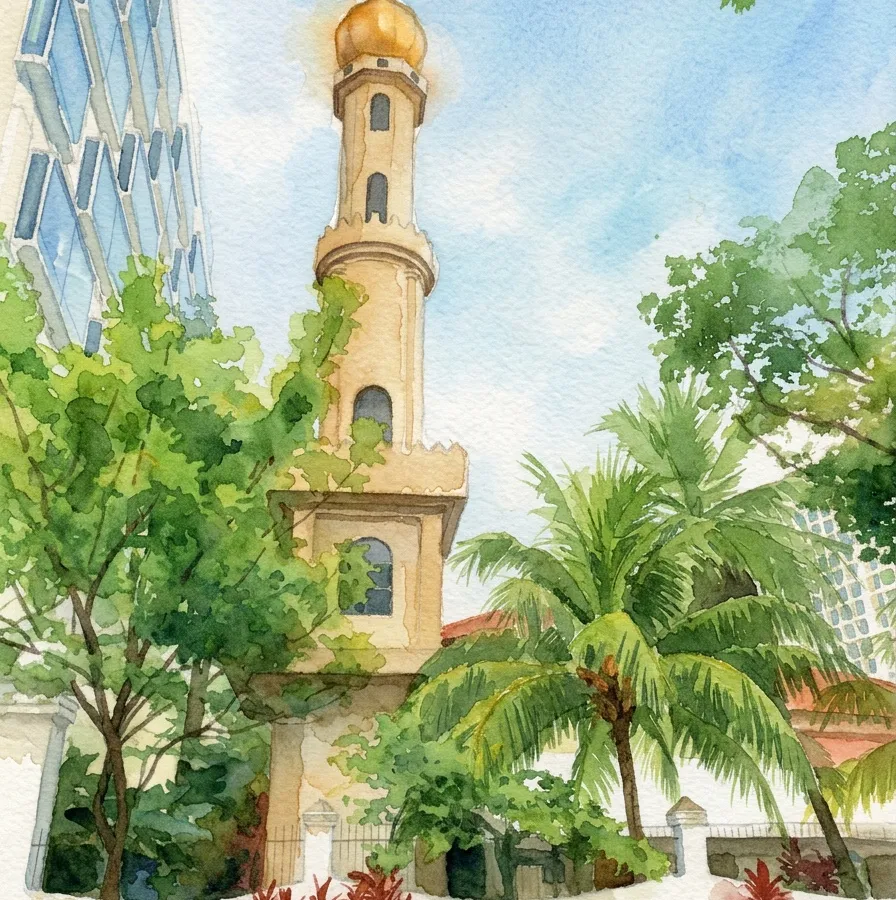
In 1820, in Kampong Malacca by the river, he built a mosque. Timber. Attap roof. No minaret.
Then he did the part that mattered.
He put the mosque and the land around it into a wakaf. A wakaf is an Islamic endowment. It takes property off the market permanently. The lots around the mosque were rented out. That rent maintained the building. In 1906 a court was still recording it that way.
Muis calls that the first wakaf in Singapore and dates it to 1820.
A wakaf can't be sold. Can't be taken back. For a merchant, that is the worst asset in the world.
Syed Omar died on 6 November 1852.
His sons inherited a trusteeship. The duty, not the asset.
Masjid Omar Kampong Melaka is 206 years old and holds 500 worshippers. A son paid to rebuild it in brick in 1855. It was rebuilt again in the 1980s.
In the early 2000s Syed Omar's remains were moved into the mosque's courtyard. He is buried inside the one asset he made unsellable.
Here's what keeps coming back to me.
His will said the house should stay in the family forever.
The family put it up for sale.
He wrote the mosque into a wakaf. Nobody could sell it. Not his sons. Not the courts. Not two centuries of redevelopment.
An intention is a request to the future. A structure is a decision the future can't reverse.
The house went on sale in 1919. Omar Road is gone.
The mosque still opens for prayers.
What in your business is protected by nothing but your intention — and who gets to overrule it once you're gone?
This is the LinkedIn edit — written to fit inside 3,000 characters.