He Taught Singapore To Breed Orchids, Then Taught It To Stop Needing Him
He ran the government orchid lab as a service for hobbyists and published the method until they no longer needed him. He is credited with 28 hybrids. Singapore registered over 2,000 grex names by the turn of the century.
Orchids are everywhere I go in Singapore. Hotel lobbies. The airport. Over 200 hybrids named after VIPs.
One man started it. He is credited with 28 hybrids of his own.
Singapore registered over 2,000 by the turn of the century.
Here's what I didn't know until recently:
He gave the method away on purpose.
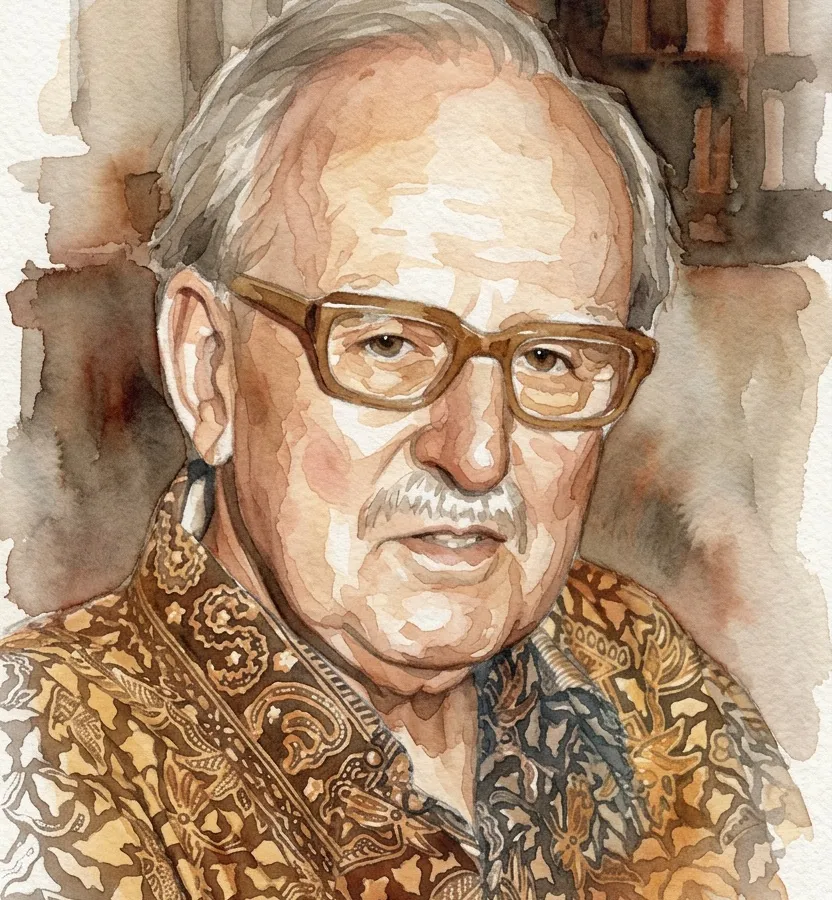
Richard Eric Holttum ran the Singapore Botanic Gardens from 1925. British. Quaker. Head of a colonial government department.
His problem was the weather. Singapore has no seasons. Little here flowers on a schedule.
Orchids were what Malaya had. Roughly 800 native species. Few made good garden plants. The answer: breed better ones. Except orchid seed barely germinates. In the wild a fungus feeds it.
Lewis Knudson, an American, published the fix in 1922. Sugar in place of the fungus. Agar in a sterile flask.
Holttum didn't invent that. He imported it.
No orchid seedlings had been raised in Singapore by pure culture, Holttum wrote. And nobody knew what a seedling needed once it came out of the flask.
That second problem was his to solve. He opened a laboratory in 1928. The first seedlings flowered in 1931.
Now look at his position. Nobody else in Singapore had done it. Local growers wanted in.
Most people become the gatekeeper here.
He became the service desk.
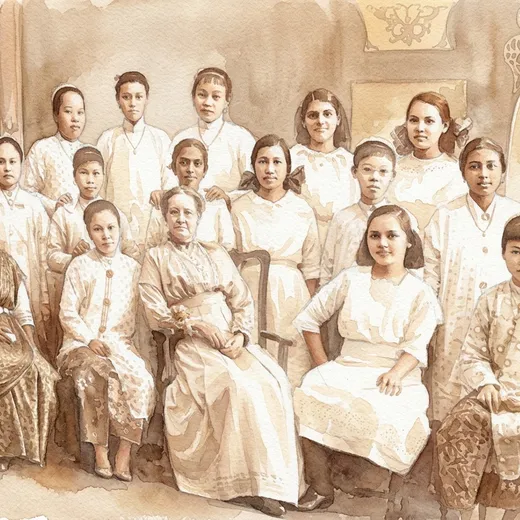
John Laycock was a lawyer who kept orchids. He made his own crosses. Then sent the seed to Holttum at the Gardens to be germinated. Holttum co-founded the Malayan Orchid Society with Laycock the same year the lab opened.
Then Singapore fell. February 1942. The Japanese never sent Holttum to the camps. They sent forty-nine of the Gardens' outdoor staff to the Siam-Burma railway. Twenty-two died. The Gardens' 1947 account names none of them.
Holttum put the full protocol into his own book in 1953.
By 1959 the Gardens was reporting it. Local growers bring seed in to be raised, it said, "while a few have now mastered the technique and raise them themselves."
A few of the Gardens' customers had stopped being customers.
Singapore's heritage board puts Holttum's personal hybrid count at 28. The big commercial one was Arachnis Maggie Oei. The orchid society says it dominated the cut-flower market for thirty years.
Laycock bred it. The lawyer. In his spare time, in a lab Holttum ran, on a method Holttum imported.
Here's what stays with me:
Holttum could have been the bottleneck.
He optimised for the number of people who could do it. Not the number he did himself.
28 against 2,000. The Gardens is in that 2,000. On his own scoreboard he loses badly. On the country's, he's the reason there's a scoreboard.
There's a whole hybrid orchid genus named Holttumara.
Kew gave him a painting of one for his 80th birthday. He accepted it in a colourful Singapore shirt.
What do you know how to do that would be worth more if you gave it away?
This is the LinkedIn edit — written to fit inside 3,000 characters.